How many people in your family have died from cancer? None? With the high rates of cancer among women, you may be the first. Did you know cancers are the second
leading causes of death in America? According to Center for Disease Control (CDC), every year approximately 250,000 women die of cancer in the United States. It’s about
time someone informs America about the signs of common cancers in women. The three
most common cancers in women are breast cancer, lung cancer, and colorectal
cancer.
 |
photo by:
"Understanding Breast Changes: A Health Guide forWomen."
National Cancer Institute |
Breast cancer is the number one
cancer in women. Don't think that if no one in your family has gotten breast cancer you can't ever get it in a million years. Nevertheless, mammograms are not always 100% correct when searching for this
cancer. In breast cancer, there are many indicators that you can check for such as: lumps or hard knots within the
breast, swelling or warming of the breast, strange size or shape of the breast,
dimpling or puckering of the skin, itchy or scaly sore or rash on the nipple,
pulling in of the nipple, random nipple discharge, and pains that do not go
away. Of course, women shouldn’t think that once they have these symptoms they
automatically have breast cancer. This is
merely a warning of what to look out for. But if women do have these symptoms they should immediately go to a doctor. If you do not find a doctor once these symptoms occur, you may regret it in the long run.
 |
photo By:
"can a Chest X-ray or Echo Detect Lung Cancer?"
HealthTap |
Coughing a great deal can mean trouble for your lungs. Lung cancer is the second most
common cancer in women. Do you ever cough so much so badly, it hurts and your lungs do not feel right, and you cough up this nasty ball of snot or phlegm? that's bronchitis. Recurring bronchitis can be a sign of lung cancer and can also be a symptom. Signs of lung cancer are coughing, pain in the chest, shoulders, or back that are unrelated to
pain from coughing, shortness of breath, changes in the voice or being hoarse, harsh sounds with each breath (stridor), pneumonia, and coughing up blood. However, just because
you have bronchitis does not mean you have lung cancer. If you are afraid that
you may have lung cancer, seek a doctor for help and don’t jump to
conclusions.
 |
photo by:
"Colorectal Survival." TNM Stage |
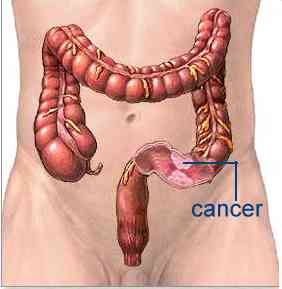
Colorectal is the third most common
cancer in women. Colorectal cancer is cancer that is in your colon, the final
portion of the tube that connects your mouth to your anus. Do you ever look at your poop? Well you should start looking at it. Common signs
of colorectal cancer are changes in bowel movements, including persistent
constipation or diarrhea, a feeling of not being able to empty the bowel
completely, an urgency to move the bowels, rectal cramping, or rectal bleeding;
dark patches of blood in or on stool; or long, thin, "pencil stools";
abdominal discomfort or bloating. Unexplained fatigue; loss of appetite, and/or
weight loss; pelvic pain, which would occur in later stages. But of course, a
bloody stool can also just be a hemorrhoid. If women feel they have had these
symptoms for a long period of time they should seek a doctor immediately for a
check-up.
According to the CDC for every 100,000 women, 118.7 women will develop breast cancer, 52.4 will develop lung cancer, and 35.4 will develop colorectal cancer. That is 206.5 women for every 100,000 women . What makes you think that you will not be apart of those 206 people? Anything is possible, and life doesn't always go your way. If you feel like you may have cancer due to any of these signs, see a doctor immediately. Your health is the most important thing and it revolves around your whole life. As what Albert Schweitzer once said, "Happiness is nothing more than good health and a bad memory".
For more information about common cancers in women visit: http://www.cancer.org/healthy/findcancerearly/womenshealth/cancer-facts-for-women
Works cited
"Cancer Among Women." Centers for Disease Control
and Prevention. Centers for Disease Control and Prevention, 24 Oct. 2013. Web.
13 July 2014.
Cornwall, Deborah J. Things I Wish I'd Known: Cancer
Caregivers Speak out. Sarasota, FL: Bardolf, 2012. Print