Showing posts with label cancer. Show all posts

Friday, November 28, 2014

Cancer


http://ep.yimg.com/ay/decorativethings/breast-cancer-gifts-53.jpg
Reasons why I choose Breast Cancer is because my aunt has it and was fighting it i'm not sure how long but she fought it off to the end and never gave up on us nor herself, she was never negative about of what was going on with chemo, medicines she took, we all supported her 100% and I hope it doesn't come back, so I wanted to know how and what caused that too happen.

Facts of preventing it is;
1. Tobacco use is the cause of 22% of cancer deaths
2.Another 10% is due to obesity or a poor diet,
3. Lack of physical activity.
4. Drinking alcohol. 
20% of cancers are usually due to infections such as hepatitis B, Nor hepatitis C. 
You can prevent this from happening by not smoking, and eating more vegetables, fruits and whole grains. Also stay fit and healthy. 
In 2012, about 165,000 children less than 15 we're diagnosed with cancer. The risk of cancer increases significantly with age and many cancers occur more commonly in developed countries.
Males are usually diagnosed with lung cancer, prostate cancer, colorectal cancer, 
also stomach cancer. Females mostly get diagnosed with breast cancer, colorectal, lung cancer and cervical cancer. 
image courtesy of

Breast cancer staging, is based on the size of the tumor, whether or not the tumor has spread to the size to the lymph nodes, in the armpits, depends if the tumor has metastasized.
Managing cancer;
Usually treated with surgery which may be followed by chemotherapy or radition therapy or even both depends.
Breast Cancer staging systems we're developed in the  1920s - 1930s.
The surgery involves the physical removal of the tumor typically along with some of the surrounding tissue.

The removal of the breast have different meanings like;
-Mastectomy, also means the removal of the whole breast.
-Quadrantectomy, is a removal of one quarter of the breast.
-lumpectory, removal of the small part of the breast.

image courtesy of

Medication
Drugs used after and in addition to begin surgery are called adjuvant therapy.
There are three main groups of medication used for adjuvant breast cancer treatment.
-Normone, blocking agents
-Chemotherapy-Chemo  is used for cases of breast cancer in stages 2-4,usually for periods of 3-6 months.
-Monoclonal antibodies

Conclusion;
This sums up to how and what causes the cancer, and how the removal of the breast takes and all the medication, and chemo appointments you have to make, and changes your life completely and how much tears and fighting you have to go through and some lose there life's by cancer and some live through it everyday, like nothing's wrong, hiding the pain, make others happy when there not. Also how many young teens get diagnosed with cancer by not taking care of themselves or it just runs in there family. This is nothing to mess around with or joke about.


Sources;
http://www.webmd.com/breast-cancer/
http://www.webmd.com/breast-cancer/guide/breast-cancer-treatment-care
http://www.webmd.com/breast-cancer/guide/breast-cancer-symptoms-and-types
http://www.webmd.com/breast-cancer/guide/breast-cancer-living-managing
http://www.webmd.com/breast-cancer/guide/breast-cancer-support-resources

Tuesday, September 16, 2014

Before It's Too Late by Cassie


(Image courtesy of womanonline.co.za)


“Where’s your dad?”
“Daddy’s outside. He told me he’ll be back. Keep the door closed, he says.”

“Daddy! I need to--- “
“Hey! Can’t you see what I’m doing? Get away! It stinks!”

“For how long has it been?”
“I don’t know. I tell him all the time but he doesn’t listen.”

“Can you just stop already? It’s dangerous for you!”
“Yeah, yeah. Sure.”

“Where are they?”
“I threw them away.”
“Are you crazy?!”
“No, you ARE!”

“I’m tired of this. Don’t you see what you’re doing? Not only you hurting yourself, you’re hurting me too! Do you want to end up like them? I’ve tried to stop you, now you need to realize. Don’t be like this anymore. You’re stronger than this. Stop while you can! It’s not too late, dad...”


For more help and information about cigarette smoking prevention, refer to the following websites:


Wednesday, August 6, 2014

Sex Health Matters

Picture is a courtesy of : http://www.smsna.org/
by Daveon D.

As Teens mature they prepare for adulthood. They face many academic and social challenges. They deal also with their developing bodies, sexual pressures from peers, and alluring sexual messages from the media. When your body reaches a certain age, your brain releases a special hormone that starts the changes of puberty, called gonadotropin-releasing hormone or GnRH for short. If teens become sexually active at puberty, they are at risk for HIV and other sexually transmitted infections. In sexual active teens and young adults, sexually transmitted diseases/infections are problematic.

Chlamydia is the most common (STD) in the U.S. and chlamydia rates have increased among 15-19 old's. HPV (human papillomavirus), another STD has been linked to cervical cancer risk. The strongest predictor for an STD diagnosis was an disorderly family; a family that is fatherless and misguided. Adolescents in these families were four times more likely to report being diagnosed with an STD. Young people who received no sex education tended to be black from low-income non-intact families and rural areas. Despite a continuous effort by many agencies to spread information about sexually transmitted diseases, they continue to affect a large percentage of the population in the U.S. And a lot of those affected is of the young population.

HIV is the virus associated with AIDS . It can only be transmitted by an exchange of bodily fluids including semen, vaginal secretions, breast milk, and blood. It cannot be transmitted by casual contact. Most people with HIV are treated with a combination of drugs known as highly active anti-retroviral therapy or HAART. Even though this cannot cure the disease, it can reduce the chances that it will progress into AIDS. HIV is no longer a death sentence because many people with the virus are living long and productive lives.

Condoms are highly effective against the most dangerous of sexually transmitted infections—HIV, the virus that causes AIDS. They are also effective against unintended pregnancy as well as against gonorrhea, chlamydia, and trichomoniasis. Condoms also help with a lower rate of cervical cancer, an HPV-associated disease. It's important that sexually active youth have access to condoms to protect their health and their lives. America we must wake up . Use protection!!  Condoms HELP ! All you got to do is use it.  Simple.


Thursday, July 31, 2014

Greasy Foods, NOT COOL! (original poem)

by Daveon D.


Greasy foods are not cool
They'll make you full
I promise you
But are these foods good for you ?
You'll become obese
That's promised to you
Stomach disease's
That's promised too
Are you ready to take this unhealthy move ?
Losing the weight will be hard to do
Do you know what these foods can do too you ?
Obesity, Diabetes, Salmonella
They're all true
They'll hurt you
But eating healthy can help and protect you 
From processed foods 
With the expiration dates overdue
I'll give you a  food choice
Between produce and noodles
Now you tell me
Which one you will do?


Wednesday, July 30, 2014

WHAT DO YOU EVEN KNOW ABOUT CANCER?!

How many people in your family have died from cancer? None? With the high rates of cancer among women, you may be the first. Did you know cancers are the second leading causes of death in America? According to Center for Disease Control (CDC), every year approximately 250,000 women die of cancer in the United States. It’s about time someone informs America about the signs of common cancers in women. The three most common cancers in women are breast cancer, lung cancer, and colorectal cancer.
photo by:
"Understanding Breast Changes: A Health Guide forWomen."
 National Cancer Institute
Breast cancer is the number one cancer in women. Don't think that if no one in your family has gotten breast cancer you can't ever get it in a million years. Nevertheless, mammograms are not always 100% correct when searching for this cancer. In breast cancer, there are many indicators that you can check for such as: lumps or hard knots within the breast, swelling or warming of the breast, strange size or shape of the breast, dimpling or puckering of the skin, itchy or scaly sore or rash on the nipple, pulling in of the nipple, random nipple discharge, and pains that do not go away. Of course, women shouldn’t think that once they have these symptoms they automatically have breast cancer. This is merely a warning of what to look out for. But if women do have these symptoms they should immediately go to a doctor. If you do not find a doctor once these symptoms occur, you may regret it in the long run.

photo By:
"can a Chest X-ray or Echo Detect Lung Cancer?"
HealthTap
Coughing a great deal can mean trouble for your lungs. Lung cancer is the second most common cancer in women. Do you ever cough so much so badly, it hurts and your lungs do not feel right, and you cough up this nasty ball of snot or phlegm? that's bronchitis. Recurring bronchitis can be a sign of lung cancer and can also be a symptom. Signs of lung cancer are coughing, pain in the chest, shoulders, or back that are unrelated to pain from coughing, shortness of breath, changes in the voice or being hoarse, harsh sounds with each breath (stridor), pneumonia, and coughing up blood. However, just because you have bronchitis does not mean you have lung cancer. If you are afraid that you may have lung cancer, seek a doctor for help and don’t jump to conclusions.
photo by:
"Colorectal Survival." TNM Stage
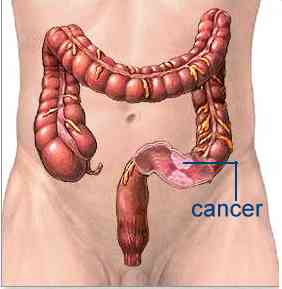
Colorectal is the third most common cancer in women. Colorectal cancer is cancer that is in your colon, the final portion of the tube that connects your mouth to your anus. Do you ever look at your poop? Well you should start looking at it. Common signs of colorectal cancer are changes in bowel movements, including persistent constipation or diarrhea, a feeling of not being able to empty the bowel completely, an urgency to move the bowels, rectal cramping, or rectal bleeding; dark patches of blood in or on stool; or long, thin, "pencil stools"; abdominal discomfort or bloating. Unexplained fatigue; loss of appetite, and/or weight loss; pelvic pain, which would occur in later stages. But of course, a bloody stool can also just be a hemorrhoid. If women feel they have had these symptoms for a long period of time they should seek a doctor immediately for a check-up.
According to the CDC for every 100,000 women, 118.7 women will develop breast cancer, 52.4 will develop lung cancer, and 35.4 will develop colorectal cancer. That is 206.5 women for every 100,000 women . What makes you think that you will not be apart of those 206 people? Anything is possible, and life doesn't always go your way. If you feel like you may have cancer due to any of these signs, see a doctor immediately. Your health is the most important thing and it revolves around your whole life. As what Albert Schweitzer once said, "Happiness is nothing more than good health and a bad memory".
For more information about common cancers in women visit: http://www.cancer.org/healthy/findcancerearly/womenshealth/cancer-facts-for-women

Works cited
"Learn about the Warning Signs of Breast Cancer." Susan G. Komen®. Charity Navigator, BBB, n.d. Web. 16 July 2014.http://www.cdc.gov/cancer/dcpc/data/women.htm
"Cancer Among Women." Centers for Disease Control and Prevention. Centers for Disease Control and Prevention, 24 Oct. 2013. Web. 13 July 2014.
"Mayo Mammography Health Study." Questions Being Addressed. MMHS, n.d. Web. 16 July 2014.
"Lung Cancer 101 | Lungcancer.org." Lung Cancer 101 | Lungcancer.org. Cancer Care, n.d. Web. 15 July 2014.
Cornwall, Deborah J. Things I Wish I'd Known: Cancer Caregivers Speak out. Sarasota, FL: Bardolf, 2012. Print

Wednesday, April 2, 2014

Health Science Explorers Take on Northwestern Unniversity


Major Trip in our program on Wednesday, March 26th, 2014. We had the privilege to partake in a college tour sponsored by Northwestern on the Magnificent Mile. We visited the 

This event was led by actual professors from Northwestern's Physical Therapy (PT) program and several current graduate students! Chandi Edmonds and Tobey DeMott Yates are both teachers in the PT program. They started our visit by asking us how our day was and then describing about history of the program. We were able to hear from two graduate students about the types of classes they were taking and what the day-to-day looks like as a student in the program. We collectively asked and even answered from our hosts and created a new bond with them that day.

Purple is one of the university's colors so our new friends loved our purple After School Matter shirts. After our Meet & Greet, we watched a news piece via ABC about an older man who had been told he was paralyzed but was determined to complete a race up the Willis Tower's staircase. The video taught us that we can improve our bodies through physical therapy and that it can help recapture one's life. 

This field trip was different from other one. We usually are taking notes and asking questions or just listening to speakers. However, we were the only group participating in this program, which was a bonus, and the instructors took us around their campus. We visited the Accelerated Rehabilitation Center and watched as physical therapists worked with actual patients. We saw what it would be like if you were hurt and how the therapists would work with you. After our tour, we participated in an activity where we had to jump off a stoop and then jumped up trying to touch the ceiling. The activity was recorded on a camera and we watched the video in slow motion to see how our body moved. This is an actual activity a Physical Therapist would use because it can tell the doctor where a patient went wrong. 

We concluded our trip with some final questions and even a demonstration of how a physical therapist would check a patient's leg who was experiencing pain. Northwestern offered our team a great lunch and a brighter understanding about physical therapy & therapist clinics. It was an amazing experience!


Saturday, March 29, 2014

Next


"Is he here today?" someone would ask.
Not surprised, it's happened in the past.
My bubbly, smiling, happy Mandarin teacher,
has stage four stomach cancer.

She complained about pain near her stomach
her entire life, but no one would hear it.
She found blood on the toilet
and decided no more could she handle it.
A couple of tests and a trip to the doctor later,
she was diagnosed with pancreatic cancer.
She tried her best to hold in her tears.
After that, my aunt would only live for half a year.

Six months later, my mom gets a call.
"Hey, it's about mom. She's not doing well at all."
A couple weeks later, my mom's on a plane to another country.
"It was hidden in her cough, something that we didn't see."
Slowly and painfully, my grandma started to plea.
She couldn't beat this lung cancer. "Please don't help me."
She died six months later, just like my aunt.
Sitting here we worry, who's next in its hunt?

Cancer has personally affected me and many of my loved ones. I hope that this poem will raise more awareness about about cancer and encourage people to be more invested in their health. The American Cancer Society's website, www.cancer.org, is one of many resources that people can visit for more information about cancer.